The OrchestrationLayerfor theBuilt Environment.
Connect people, robotics, assets, systems and services. Turn operational signals into coordinated action.
From scheduling to self-running operations.
Every operation follows the same journey:Capture → Understand → Respond → Predict.
Operational Capture
Attendance, activities, movements and compliance.
Operational Intelligence
Real-time visibility and operational insight.
Operational Orchestration
Automated dispatch and coordinated action.
Autonomous Operations
Anticipate demand and act proactively.
Everything you already run.
Connected.
Workforce Guidance ingests signals from your people, occupants, sensors, building systems and third party platforms — then turns them into coordinated action.
A platform that doesn't just record events.
- →Understands what is occurring now.
- →Determines what should happen next.
- →Coordinates the response automatically.
One Platform.
Three Operational Layers.
Workforce Guidance brings together software, operational infrastructure and emerging robotic technologies within a single orchestration platform. Whether you're improving workforce performance today or preparing for autonomous operations tomorrow, Workforce Guidance is the scalable foundation for the future of facilities management.
Platform Capabilities
Explore the software capabilities that power workforce management, operational excellence, intelligence, dispatch and automation.
Hardware & Devices
Discover the connected sensors, counters, kiosks and field devices that capture operational data and trigger action.
Robotics Orchestration
See how Workforce Guidance is evolving to coordinate human teams, autonomous robots and intelligent systems from a single platform.
From Workforce Management to Autonomous Operations.
Workforce Guidance supports organisations at every stage of operational maturity. Organisations progress at different rates — we provide a practical pathway from workforce management and operational visibility through to connected, orchestrated and increasingly autonomous operations.
Workforce Management
Coordinate, verify and report on the people delivering your services.
Connected Operations
Bring sensors, building systems and external platforms into one operational view.
Operational Intelligence
Turn activity and signal into dashboards and decisions that change behaviour.
Operational Orchestration
Coordinate people, sensors, robotics and systems as one connected workforce.
Autonomous Operations
Predict, automate and act on operational signals with minimal human intervention.
Built for operations that can't afford to miss.





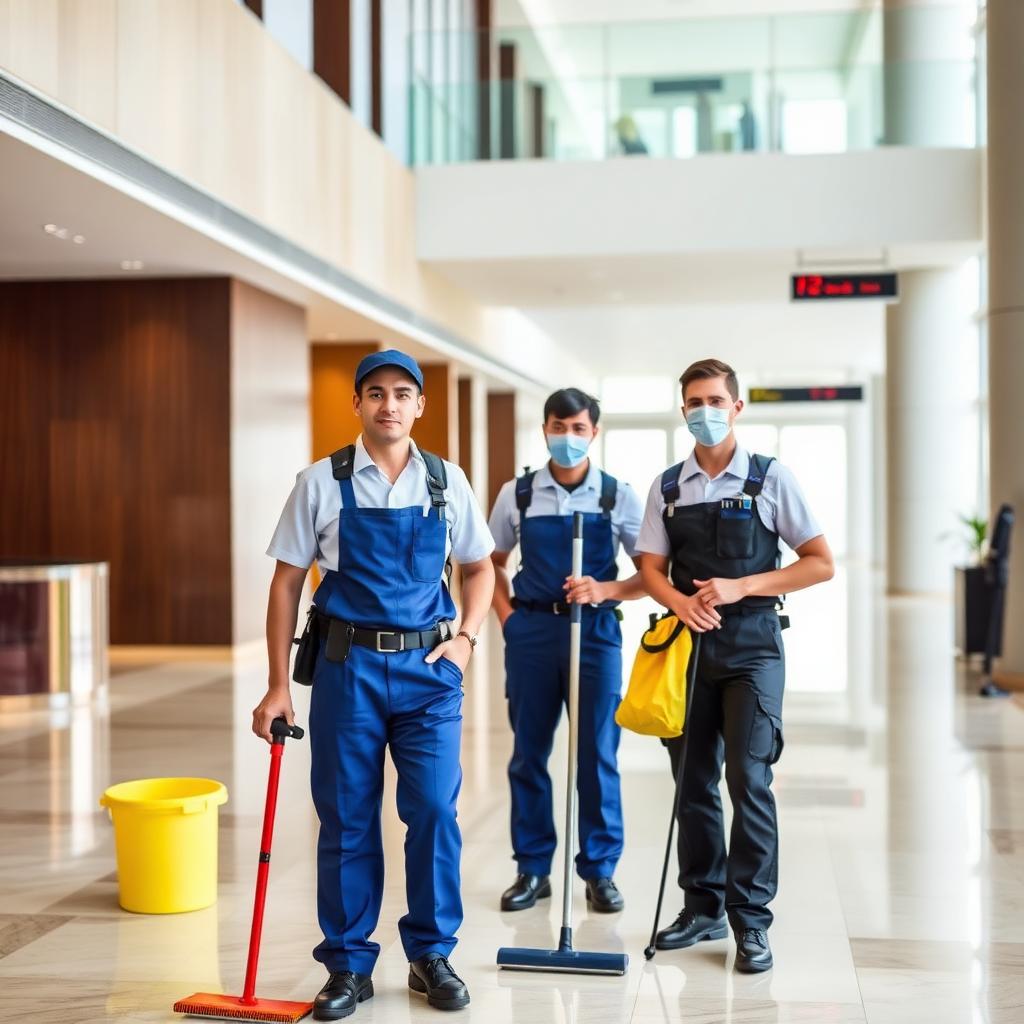
Real outcomes from connected operations.
Improvement in attendance adherence
After enabling automated monitoring and escalation.
Increase in customer satisfaction
Bathroom ratings increase from 2.3 to 4.6 stars.
Visibility of Service delivery
Know who attended, what happened and when.
Continuous operational monitoring
Sensors, teams and systems working together.
Indicative outcomes observed across thousands of deployments
The shift from reactive to autonomous.
- ✕Multiple systems, teams and data sources
- ✕Reactive service delivery
- ✕Manual coordination and escalation
- ✕Limited visibility and accountability
- ✓One operational layer
- ✓Real-time visibility across all services
- ✓Automated coordination and dispatch
- ✓Measurable outcomes and accountability
Every operation starts somewhere.
From manual operations to fully autonomous service delivery, Workforce Guidance meets you wherever you are. Most organisations operate across multiple stages simultaneously. Standardise operations today while preparing for what's next.
Common questions.
Do we need to replace our existing systems?+
How long does it take to get value?+
Where do we start?+
Do I need smart sensors and robotics to use Workforce Guidance?+
As your operation matures, additional technologies can be connected including:
- · People counting
- · Occupancy monitoring
- · Smart bathrooms
- · Waste scales
- · Environmental sensors
- · CCTV analytics
- · Robotics
- · Access control systems